

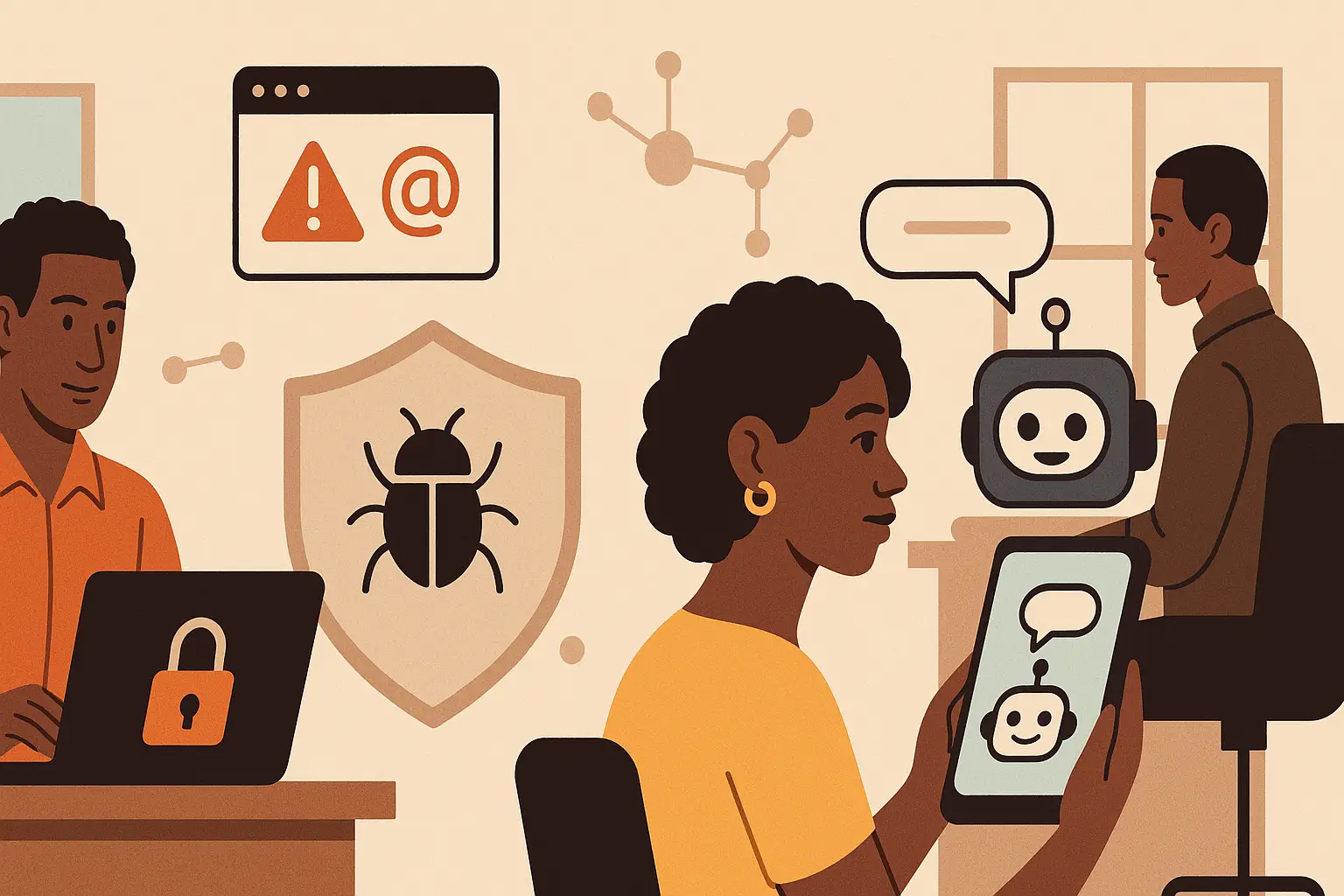
Across Africa, the digital economy is growing at an unprecedented pace. Mobile money, fintech innovations, and social media have become daily lifelines. Governments are passing new data protection laws, and conversations about online safety are increasingly visible in the media.
Yet beneath this progress lies a critical paradox: while concern about cybersecurity is rising, secure practices are not keeping pace.

Many people continue to rely on weak or reused passwords. Multi-factor authentication (MFA), one of the simplest and most effective safeguards, remains underused, even on platforms where it is available. Small businesses and NGOs often lack the training and resources to enforce even basic digital hygiene.
This gap is not merely technical. It reflects broader cultural and systemic issues: the prioritization of convenience over security, the absence of sustained awareness campaigns, and the limited integration of digital safety into everyday literacy.
The consequences are profound. Weak security practices not only leave individuals vulnerable to fraud and identity theft but also endanger activists, journalists, and human rights defenders who operate under hostile conditions. The resilience of Africa’s digital economy depends on closing this gap.
The way forward requires collaboration: platforms enabling stronger security by default, governments and civil society running localized awareness campaigns, and schools integrating digital safety into their curricula.
Cybersecurity in Africa cannot be left to experts alone. It must become a shared responsibility: woven into the daily lives of citizens who increasingly depend on the digital world.

Leave a Reply